

⸻ ooOooOoo ⸻
A forest is an eco-system with great diversity of plants, animals & fungi all harmonizing together & interacting in many layers. Designed by nature & maintained as a system in perfect balance.
Imagine that definition of a forest, but as a system that produces food. By understanding how nature designs a forest that is self maintaining, self-replicating, we can model that system with productive species so that we can produce food in a sustainable way with the minimum amount of input for the maximum amount of output, anywhere in the world.

Image source: lilliehouse.blogspot.com
Any Size
The word 'forest' in a food forest garden isn't about size. It's about creating an ecosystem that is self-sustaining the way a forest is. A food forest can take place in a small backyard. For more details see attainable-sustainable.net.

Image source: attainable-sustainable.net
Imagine
Our conventional lawn (mostly grass, and some ornamental plants for visual appeal) is tremendously labour intensive. It offers us a flat open place that is hardly used. Imagine replacing a lawn with an edible forest garden (a.k.a. food forest). Imagine that it is dinner time, you take a basket before entering your edible forest. You stroll through curved paths that weave their way through a number of different plants to a mystical, shady area, with a seat, waiting for your moment of solitude.
You return to your kitchen with fresh salad varieties, aromatic herbs, cooking greens, fresh fruit for dessert, and the deep sense of peace, resilience and integrity. After harvest season has passed, and the following spring arrives you delight in the leaves peeking up from the earth — without any effort on your part. You have no need to buy nitrogen fertilizers — since your nitrogen fixer plants (e.g. radishes, beans, etc.) do their job, no need for chemical pesticides since your curated insectary will be attracting beneficial insects. Minerals washed deep into the soil are drawn back up through the dynamic accumulators (plants that gather certain minerals or nutrients from the soil and store them in a more bioavailable form and in high concentration in their tissues). The soil is quickly covered by perennial leaves, which help to keep moisture in the soil and prevent weeds.
How
All forests have 7 layers starting from the top, down:
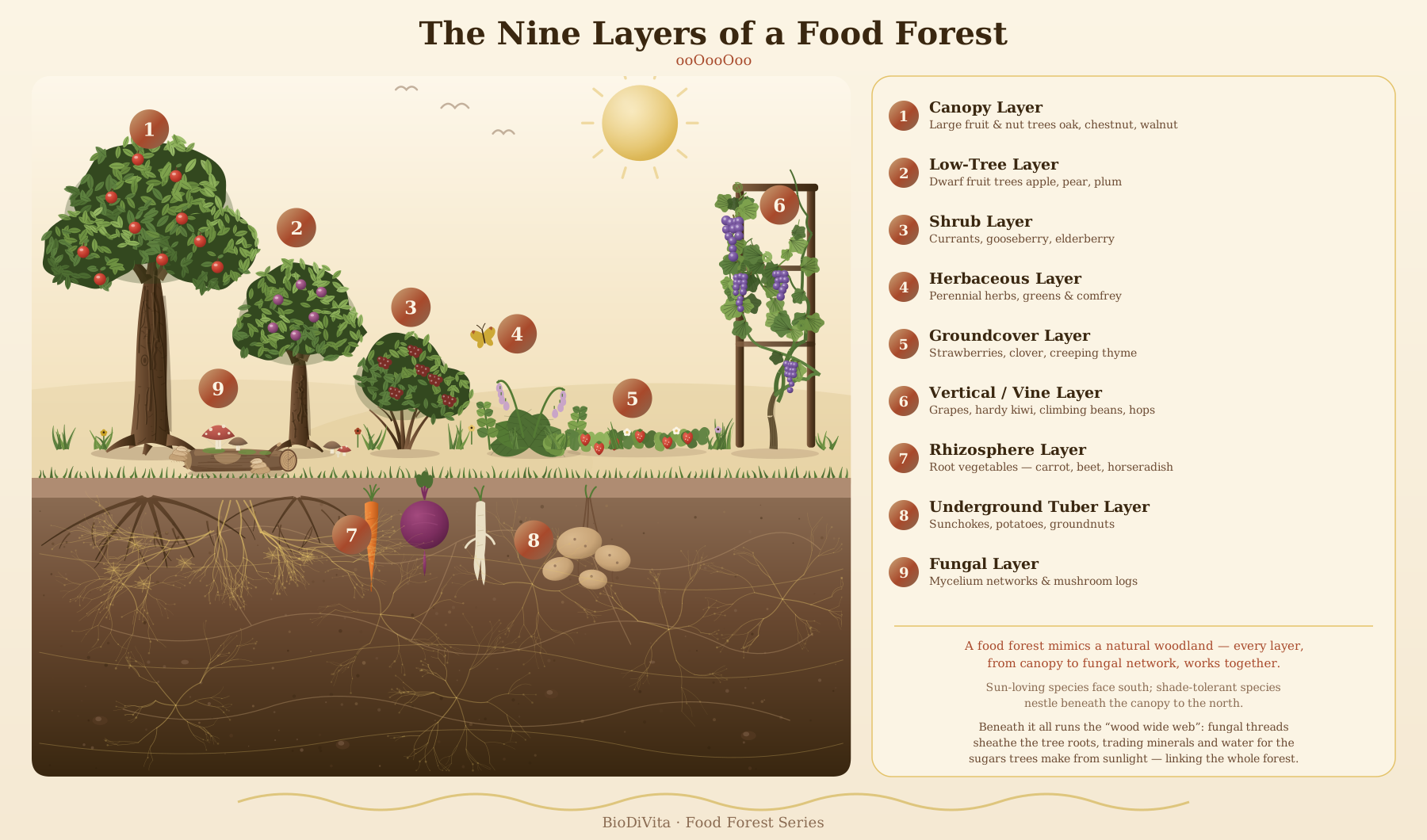
Those are the basic layers that occupy all the space, no matter what climate you are in. When we design a food forest we put all those layers into action to our benefit for production & maintenance of the food forest through function.
Food forests integrate & draw from the disciplines of permaculture, ecology, biology & other natural living sciences.
Use Animals to Prep the Soil (Optional)
Use animals to prepare the soil. Ducks can be used to manure the ground — they condition the soil, making it ready for replanting with the support species and interplanting, and fruit trees where there are gaps.
Food forests function as a living eco-system — they are very diverse & stable. And there is nothing like this in modern agriculture. Nothing is as diverse, nothing is as stable, nothing is as fertile. The production of soil in a food forest is constant, so the fertility is constantly increasing. With a food forest system, you have a system that self-replicates over time. This is a proven system.
He is referring to a food forest which will work anywhere. It is these systems that give us permanent security, worldwide. We just need people to realize that if we all move in the same direction, we can solve all the world's problems by supplying all our needs without causing any damage whatsoever — such that we can be the most beneficial element on this planet.
Visual Appeal Without Being Labour-Intensive
Careful use of color can bring amazing beauty, character and variety. Complementing color & texture is key.
The yellow daffodils add bright pops of color and they look gorgeous next to the purple cabbage and violets. The use of large pots within the garden adds variety in heights and the bird bath creates a focal point. The mix of large leaves, narrow leaves, and differing flower shapes add tons of texture to this garden. Integrating ornamental flowering plants is HIGHLY RECOMMENDED; the visual appeal soothes the soul while the food forest nourishes the soul. A healthy & thriving food forest can tend to look messy over time when a variety of plants are grown together.

Image source: dailyharvestdesigns.com
Mulchy-Mulchy-Mulch
Mulching is great because it reduces soil moisture, reduces weeds, can help fertilize the soil, and makes for less mess when walking around the garden. BUT it takes time, work, and resources.
Ecosystems like the food forest are SELF-MULCHING and clever gardeners design gardens that do the same! In well-functioning plant communities, the plants look after each other, and do all the gardener's work: watering, weeding, fertilizing, pollinating and mulching.
